
What Is Kerala Mural Painting? A Simple Guide for Beginners
Have you ever seen a beautiful painting of Lord Krishna, Lord Shiva, or Radha and Krishna with bright colours and beautiful details? These paintings may be examples of Kerala mural art. Kerala mural painting is a traditional art form from Kerala. It is known for its beautiful colours, detailed lines, and pictures that tell stories. In the past, these paintings were mainly seen on the walls of temples and palaces. Today, artists also create them on canvas, wooden boards, and other surfaces. You do not need to be an expert to learn this art. With the right materials, some guidance, and regular practice, you can start learning it too. In this blog, we will learn about Kerala mural painting, the colours and brushes used, simple shading techniques, and useful tips for beginners.
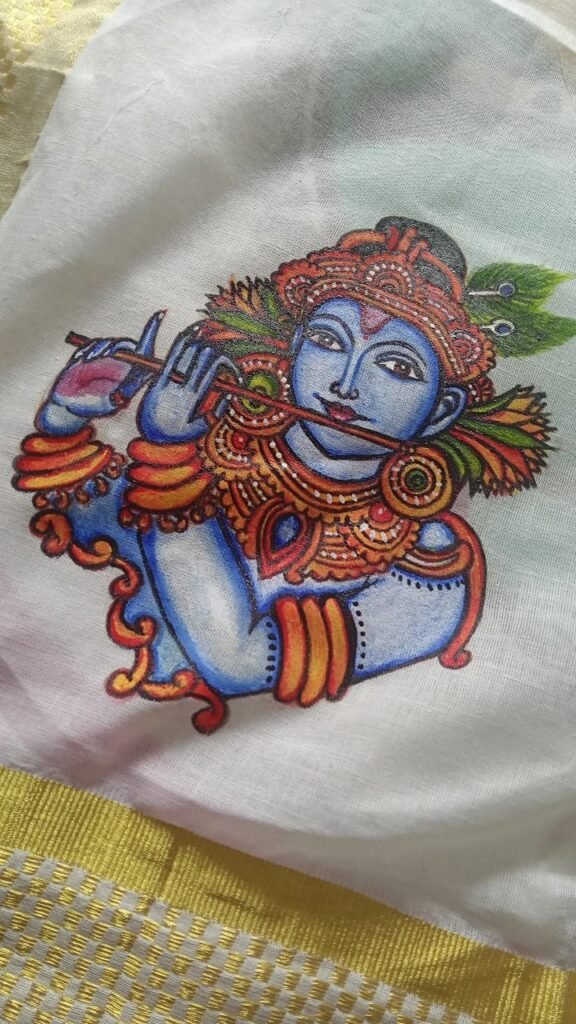
1. What Is Kerala Mural Painting?
Kerala mural painting is a traditional style of painting that started in Kerala. Many paintings show gods and goddesses, stories from Indian mythology, flowers, and other traditional designs. One special thing about this art is the way artists use colours, lines, and small details to make each painting beautiful. Today, artists create Kerala mural paintings in both traditional and modern styles. You can find them on walls, canvas, and other suitable surfaces.
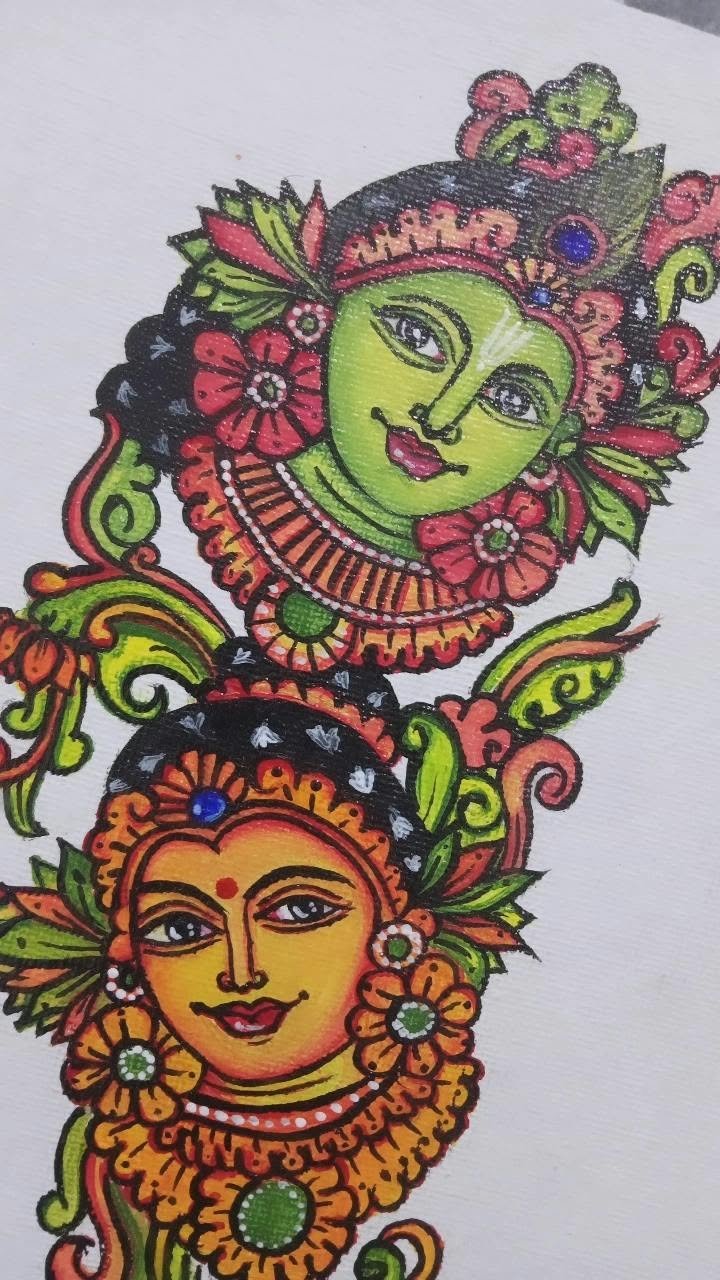
2. A Short History of Kerala Mural Painting
Kerala mural painting has a long history. It is an important part of Kerala’s art and culture. In the past, artists painted stories about gods, goddesses, and events from Indian mythology on the walls of temples and palaces. These paintings were made carefully by hand. Artists spent a lot of time drawing the figures, choosing colours, and adding small details. Even today, artists continue to learn and practise this beautiful art. Some follow traditional methods, while others use modern paints and materials.
3. What Colours Are Used in Kerala Mural Painting?
Colours make Kerala mural paintings beautiful and easy to recognise. Traditional artists used colours made from natural materials. Today, many artists also use ready-made paints, including acrylic colours. Red, yellow, green, white, and black are commonly described as the main colours in traditional Kerala mural art. Other colours, such as blue and brown, are also used.
Red
Red is a bright and strong colour. It is often connected with strength, courage, energy, and protection. Traditional red colours could be made from red earth and minerals.
Yellow
Yellow makes a painting look bright and warm. It is often connected with wisdom and prosperity. Traditional yellow colours could be made from natural materials such as yellow ochre.
Green
Green is often used for leaves, plants, and other details. It is connected with nature and harmony. In some traditional methods, artists created green by combining blue and yellow colours.
White
White is often connected with purity and peace. In some traditional mural methods, artists leave parts of the prepared white surface visible instead of painting over them with white paint.
Black
Black is mainly useful for drawing outlines and adding small details. It helps define the shapes of faces, eyes, ornaments, and other parts of a painting. Traditionally, black colour could be made from soot.
Blue
Blue and greenish-blue shades are also used in some mural paintings. Shyama is a traditional term used for certain dark or greenish-blue shades, including in some depictions of divine figures such as Lord Krishna. The exact colours depend on the painting style and the artist’s method.
Brown
Brown is useful for adding shadows and making some parts of a painting look darker. Artists can mix suitable colours to create different brown shades.
Can you use acrylic paints for Kerala mural painting?
Yes! Many artists today use acrylic paints to create mural-inspired artwork. Acrylic paints are available in many colours and can be used on suitable surfaces. They are a convenient option for many modern painting projects. However, traditional mural painting may use different paints and surface-preparation methods.
4. What Materials Do You Need?
Before starting your painting, collect a few basic materials.
A canvas or a suitable painting board
Paints that work well on your chosen surface
A pencil for drawing the design
A palette for mixing colours
Brushes of different sizes
Water, if needed for your paints
A cloth or tissue for cleaning brushes
You do not need to buy many expensive materials when you are just starting. Begin with a few good brushes and basic colours. You can buy more materials as you learn.
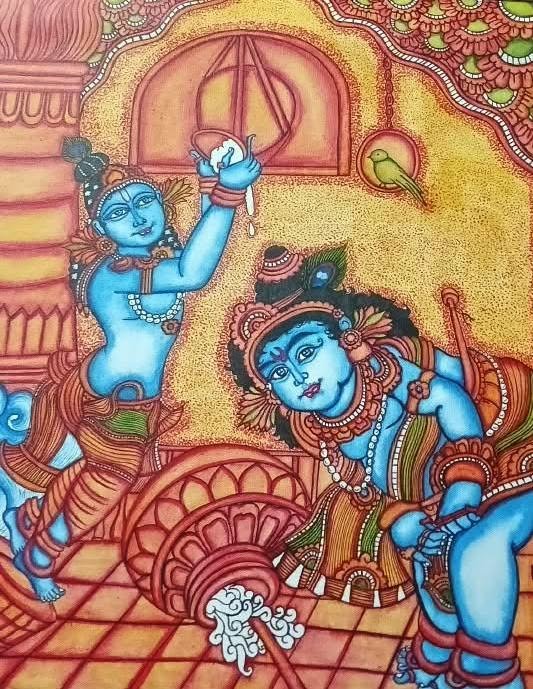
5. Which Brush Is Best for Kerala Mural Painting?
Choosing the right brush can make painting easier. Different brushes are useful for different types of work.
What Is a Long-Hair Brush?
A long-hair brush has longer bristles than many regular brushes. It can hold a good amount of paint and help you draw long, smooth lines without stopping too often to collect more paint. Long-hair brushes can be useful for certain mural painting techniques, especially when you need to make smooth lines.
There are two common types of long-hair brushes.
Natural-Hair Brushes
Natural-hair brushes are made using animal hair. A good-quality natural-hair brush can hold a good amount of paint and release it smoothly. This can make it easier to paint long lines and work on certain shading techniques.
Synthetic-Hair Brushes
Synthetic brushes are made using man-made fibres. They can be easier to clean and maintain. Good-quality synthetic brushes can also give smooth lines and good results.
Which Brush Should You Choose?
For some traditional painting techniques, a good-quality long-hair natural brush can be a useful choice because it holds paint well and helps create smooth, continuous lines. However, natural-hair brushes are not always better than synthetic brushes. The best choice depends on the paint, the quality of the brush, and the work you want to do.
Beginner tip: Before painting on your main artwork, practise using your brush on a separate sheet. Try drawing long lines, short lines, and curves. This will help you understand how much paint your brush can hold and how to control it.
6. What Are the Shading Techniques Used in Kerala Mural Painting?
Shading means making some parts of a painting darker or lighter. It helps the painting look more detailed and makes the shapes easier to see. Some traditional Kerala mural painting methods use special techniques to create these details. Here are four terms explained in simpler way
1. Pathrakam (Patrakam)
Pathrakam is described in some mural-art references as a method of using fine, slanting lines. These lines follow the shape of the object being painted. They may look like the small lines on a leaf. Artists use this type of line work to add detail and shading.
Simple example: Imagine drawing many small slanting lines on a leaf. These lines can help show its shape and details.
Beginner tip: Practise drawing small slanting lines side by side. Try to keep them neat and follow the shape of your design.
2. Rekhikam
Rekhikam is a line-based method used to add details and shading. It uses fine lines drawn in a particular direction. Depending on the method, the lines may be straight, parallel, or crossed over one another.
Simple example: Imagine drawing several straight lines close together. The lines help create a clear pattern and can make an area look darker.
Beginner tip: Practise drawing straight lines with similar spacing. Keep your hand steady and try to make the lines neat.
3. Bindujam
Bindujam is described as a method of creating shading with tiny dots. When dots are close together, the area can look darker. When the dots are farther apart, the area can look lighter. Artists carefully place the dots to create different shades and details.
Simple example: Imagine drawing tiny dots inside a circle. Put more dots on one side and fewer dots on the other side. The side with more dots will look darker.
Beginner tip: Start with a small shape and practise making tiny dots. Take your time because this method needs patience.
4. Lepanam
Lepanam is different from the shading methods mentioned above. The term generally refers to applying a coating or layer to a surface. Before painting, the surface must be prepared properly. The way you prepare it depends on the material you are using. For example, preparing a traditional mural wall is different from preparing a canvas for acrylic painting.
Beginner tip: If you are painting on canvas or a board, follow the preparation instructions for that surface and paint.
Note: The exact meanings and uses of these traditional terms may vary between artists and teaching methods.
9. Can Beginners Learn Kerala Mural Painting?
Yes! Beginners can learn Kerala mural painting with practice and proper guidance. You do not need to know all the techniques before you start. First, learn how to draw simple shapes. Then practise using brushes, mixing colours, and adding small details.
ou can also join our Let’s learn mural with APZ Art WhatsApp group to learn more about Kerala mural painting and get updates about our beginner-friendly workshops. Join us to learn, practise, and explore the beauty of mural art!
The most important thing is to start slowly, enjoy the process, and keep practising.
10. Where Can You Use Kerala Mural Art Today?
Kerala mural art is not limited to the walls of temples and palaces. Today, artists create mural-inspired artwork for many different purposes.
You can use it for:
Paintings to decorate your home
Traditional artwork on canvas
Handmade gifts for birthdays and anniversaries
Personalised paintings for family and friends
Decorative artwork inspired by Kerala’s culture
A handmade painting can be a special gift because it is created with time, effort, and care.
Why Is Kerala Mural Painting Special?
Kerala mural painting is special because it brings together art, culture, colours, and stories. The beautiful designs and small details show the patience and skill of the artist. This art form also helps people learn more about Kerala’s artistic traditions. Whether you want to learn painting, decorate your home, or give someone a handmade gift, Kerala mural art is a wonderful style to explore.
Conclusion
Kerala mural painting is a beautiful traditional art form from Kerala. Learning about colours, brushes, and shading techniques can help you understand how these paintings are created. If you are a beginner, start with simple designs and practise regularly. You do not need to be perfect from the beginning. Take your time and enjoy learning something new. At APZ Art, we love creating artwork that brings creativity and meaning together. Explore APZ Art to discover more beautiful artwork, personalised creations, and traditional art-inspired designs.
Have an idea for a custom artwork? Get in touch with APZ Art and let us bring your idea to life.
Want to Learn More About Kerala Mural Painting?
Would you love to learn more about Kerala mural painting and its techniques?
Join our APZ Art WhatsApp group to get more art tips, learn new techniques, and receive updates about our upcoming live workshops. We will share workshop details and other useful information in the group. Join our WhatsApp group and let’s learn mural painting together!
Are you looking for customised paintings, portrait drawings, Kerala mural paintings, or unique personalised gifts? APZ Art offers a wide variety of handmade and customised artwork made with love and creativity. Visit our website to explore our art collection, discover more designs, and find the perfect artwork for yourself or your loved ones!
Visit: APZ Art